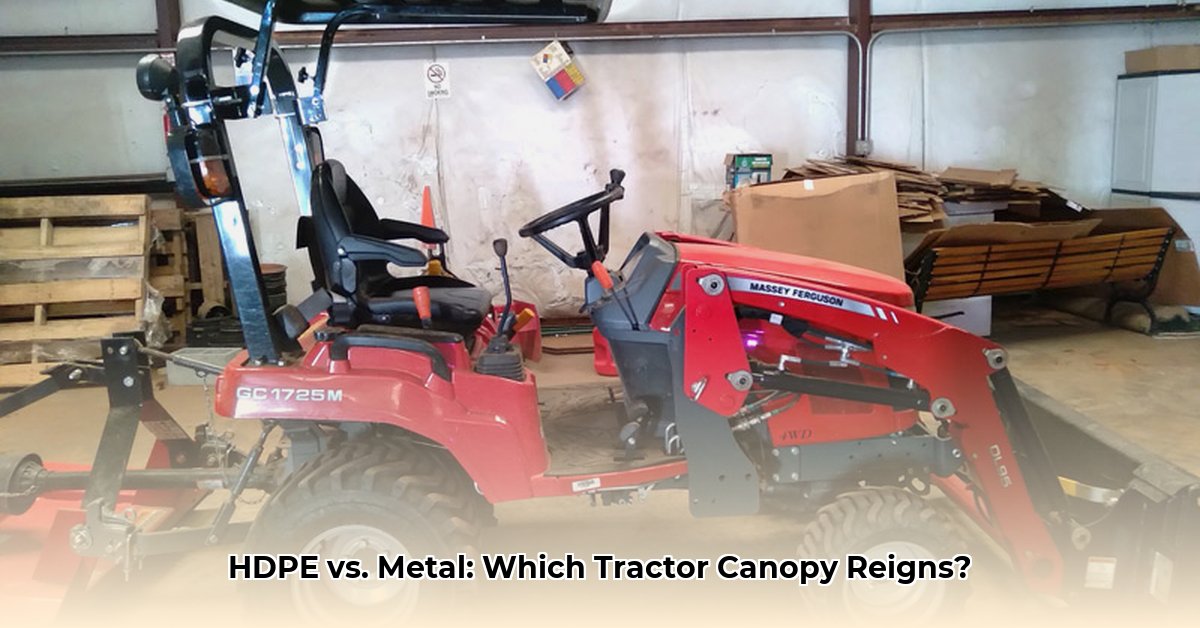
Choosing the right canopy for your small tractor is crucial for comfort, safety, and protecting your investment. This guide compares high-density polyethylene (HDPE) and metal canopies, helping you make an informed decision. We'll explore material properties, installation, and maintenance, empowering you to choose the perfect canopy for your needs. For more canopy options, check out this helpful resource.
HDPE vs. Metal Canopies: A Comparative Review
Both HDPE and metal offer distinct advantages and disadvantages. The best choice depends on your priorities and how you use your tractor.
| Feature | HDPE | Metal |
|---|---|---|
| Weight | Significantly lighter; easier handling | Heavier; may impact fuel economy |
| Durability | Good impact resistance; excellent UV protection | Very strong; potential for rust issues |
| Cost | Generally more affordable | Typically more expensive upfront |
| Maintenance | Low maintenance; occasional washing needed | Higher maintenance; rust prevention crucial |
| Installation | Typically easier DIY installation | Can be more challenging; may need professional help |
| Impact Resistance | Good for minor impacts; less likely to dent | Excellent, withstands significant impacts |
HDPE canopies are like a lightweight raincoat – great for everyday use and easy to maintain. Metal canopies are more like a sturdy suit of armor, built to withstand serious impact but requiring more care.
Choosing the Right Canopy: A Decision-Making Guide
Before you buy, ask yourself:
Budget: Metal is pricier upfront but might last longer with proper maintenance. HDPE is more budget-friendly initially.
Weight: A heavier metal canopy can affect fuel efficiency, particularly on uneven terrain. HDPE's lighter weight is advantageous.
Weather: Both offer sun protection, but HDPE's UV resistance might be superior in harsh climates. Metal sheds water better, but HDPE is surprisingly water-resistant.
Usage & Terrain: Tough jobs require a robust metal canopy's impact resistance. For lighter work, HDPE suffices.
DIY Skills: HDPE installation is typically easier than metal, which might require professional help.
Installing Your New Canopy: A Step-by-Step Guide
This is a general guide; always follow your canopy's instructions. Safety first! Wear gloves and safety glasses.
Preparation: Gather tools (wrenches, sockets, possibly a drill), and clear the area around your tractor.
ROPS Inspection: Thoroughly inspect your Roll Over Protection Structure (ROPS) for damage. A clean, undamaged ROPS is crucial.
Attachment: Carefully align canopy brackets with ROPS attachment points. Ensure a perfect fit.
Secure Fasteners: Tighten bolts and nuts securely, avoiding over-tightening. Use a torque wrench if needed.
Final Check: Visually inspect for loose parts or misalignments. If something seems off, adjust accordingly. If you are uncomfortable, seek professional help.
Canopy Maintenance: Extending Its Lifespan
Regular maintenance extends your canopy's life.
HDPE: Clean regularly with soap and water; a pressure washer is helpful for stubborn dirt. Inspect for cracks or damage and address promptly.
Metal: Inspect for rust, especially in humid climates. Remove loose rust with a wire brush. Apply a rust preventative coating (paint or rust inhibitor) as needed. Touch up paint as required.
Key Takeaways: Choosing the Best Canopy for You
- Metal: Superior durability and repairability, ideal for harsh environments. Longer lifespan.
- HDPE: Lighter, more affordable, and easier to install. Good for less demanding applications.
- Decision: The best choice depends on your budget, work environment, and DIY skills.
This guide provides a framework. Always consult the manufacturer's instructions for your specific canopy and tractor model. Ongoing research and innovation in materials are happening, so stay informed about the latest developments!